



Paper vs Plastic Cups: What’s Better for the Environment?

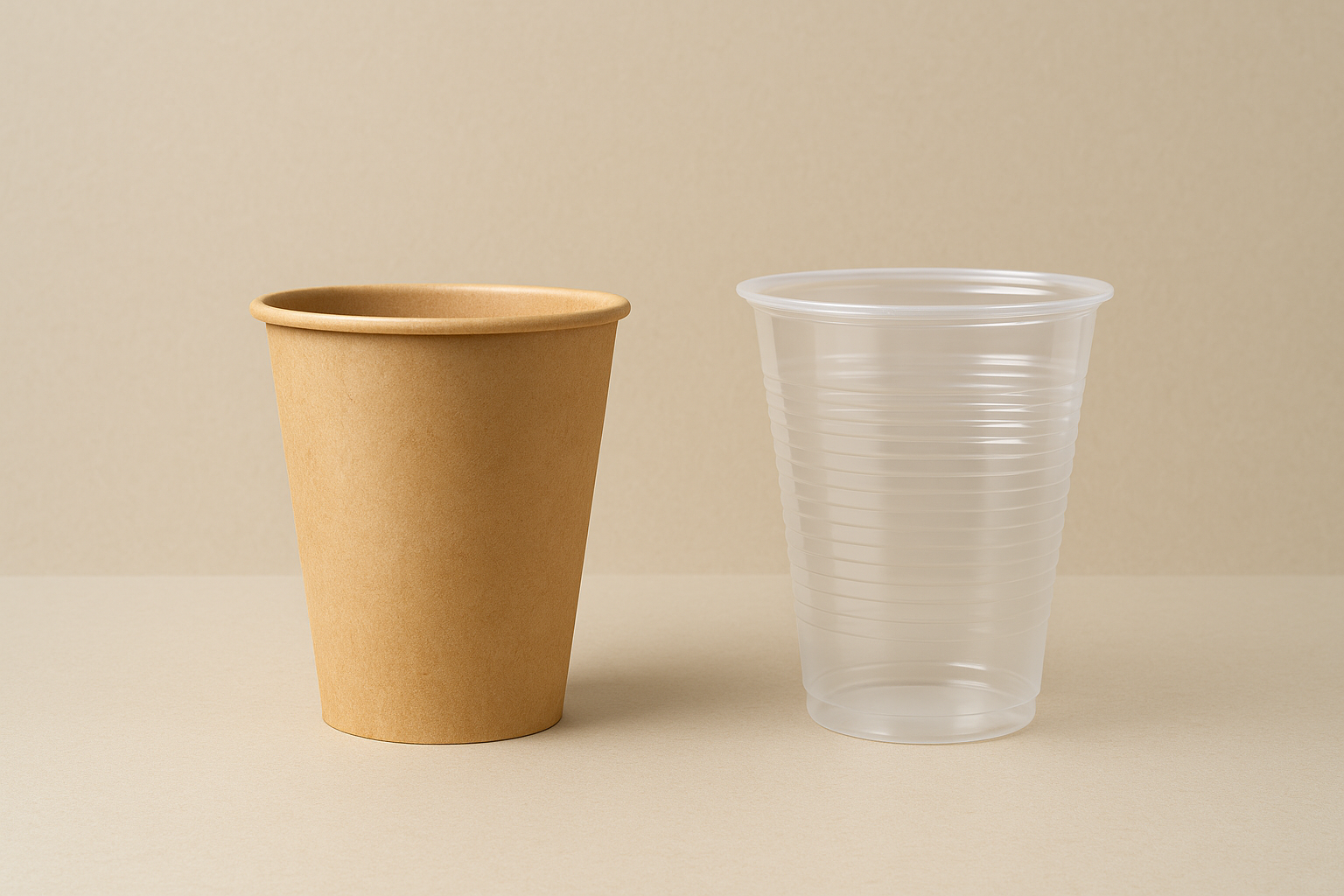
In today’s fast-paced world, disposable cups have become a part of our everyday convenience—whether it’s for your morning coffee, office meetings, or outdoor events. But the growing concern about environmental impact has raised an important question: Are paper cups better than plastic cups?
This blog dives deep into the paper vs plastic disposable cups debate, comparing their material composition, cost, usability, environmental impact, and consumer perception to help you make an informed decision for your business or event.
1. What Are Disposable Cups Made Of?
🟤 Paper Cups
Paper cups are typically made from food-grade paperboard lined with a thin layer of plastic or bioplastic (PLA). This lining prevents liquid from leaking out.
- Types: Single wall, double wall, and ripple wall paper cups
- Lining Material: Polyethylene (PE) or PLA (biodegradable)
⚫ Plastic Cups
Plastic cups are usually made from:
- Polypropylene (PP) – durable and heat-resistant
- Polystyrene (PS) – lightweight, used for cold drinks
- PET (Polyethylene Terephthalate) – clear, glossy appearance
Each material has different recycling and heat resistance properties.
2. Environmental Impact
♻️ Paper Cups: Not Fully Green
Although paper is a renewable resource, most paper cups are lined with plastic, making them hard to recycle.
- Recycling Issues: Only a few specialized facilities can separate the plastic lining from the paper.
- Biodegradability: If not lined with PLA or certified compostable, paper cups won’t decompose naturally.
PROS
- Made from renewable resources (trees)
- Easier public perception of being “eco-friendly”
CONS
- Difficult to recycle
- Often require more water and energy to produce
🛢 Plastic Cups: High Carbon Footprint
Plastic cups, especially single-use types, have long decomposition times (up to 500 years). They contribute significantly to land and ocean pollution.
PROS
- Some types (like PP and PET) are recyclable
- Lower water usage in production
CONS
- Derived from fossil fuels
- High environmental persistence
Verdict: Both have environmental downsides, but paper cups lined with PLA or certified compostable variants are the greener option when disposed of properly.
3. Cost Comparison
💰 Paper Cups
- More expensive to produce and transport (heavier weight)
- Custom printing increases cost
- Environmentally friendly options like PLA lining add cost
💸 Plastic Cups
- Cheaper per unit
- Lightweight and easy to stack
- Lower transport cost
Verdict: Plastic cups are more cost-effective, but paper cups offer more eco-credibility, which may justify a higher price for many businesses.
4. Usability & Performance
🔥 Hot vs Cold
- Paper cups are better suited for hot beverages like tea or coffee.
- Plastic cups (especially PET or PS) are ideal for cold drinks, juices, and water.
🧊 Insulation
- Double-wall and ripple-wall paper cups provide better insulation.
- Plastic cups may require sleeves or double cupping for hot drinks (which is not recommended due to melting risks).
🥤 Durability
- Plastic cups are generally more sturdy and resistant to spills.
- Paper cups can get soggy or leak if poorly manufactured.
Verdict: Choose paper cups for hot beverages and plastic cups for cold drinks. If you must choose one, double-wall paper cups offer good all-round performance.
5. Health & Safety
Paper Cups
- Safer for hot drinks – no risk of plastic leaching
- Can be biodegradable and BPA-free if manufactured properly
Plastic Cups
- Risk of chemical leaching, especially if exposed to heat
- Cheap plastic cups can release styrene, a potential carcinogen
Verdict: Paper cups are safer for hot liquids, especially when BPA-free and food-safe certified.
6. Consumer Perception
In an age where sustainability is a selling point, consumer perception matters:
- Paper cups are seen as eco-conscious and responsible.
- Plastic cups may be viewed as outdated or harmful to the environment.
Customers are increasingly influenced by a brand’s sustainability practices. Using paper cups with eco-friendly certifications (like FSC or compostable symbols) can boost your brand image.
7. Regulatory Trends
Governments worldwide are phasing out or taxing single-use plastics:
- EU Single-Use Plastics Directive bans several plastic items including cups with non-detachable lids
- India, UAE, and other countries are moving toward banning or limiting plastic disposables
- UAE’s recent directives encourage use of eco-friendly materials in packaging and disposables
Businesses that rely heavily on plastic cups may face legal and reputational challenges.
Verdict: Transitioning to paper-based or compostable options aligns better with evolving regulations.
8. Innovation in Materials
The rise of biodegradable and compostable cups has added new contenders to the debate:
- Bagasse (sugarcane fiber) cups
- Cornstarch-based PLA cups
- Recyclable paper cups without plastic lining (water-based barrier tech)
These options provide sustainability without compromising usability, although they are currently more expensive.
9. Which Should You Choose?
Here’s a quick comparison table:
| Feature | Paper Cups | Plastic Cups |
|---|---|---|
| Best for | Hot drinks | Cold drinks |
| Cost | Higher | Lower |
| Environmental Impact | Better if compostable | Poor |
| Recyclability | Limited | Moderate (depends on plastic type) |
| Heat Resistance | Good | Poor |
| Custom Branding | Excellent | Moderate |
| Consumer Perception | Positive | Negative |
| Regulatory Future | Safer | Risky |
10. Final Verdict
Paper cups are generally the better choice for businesses looking to align with modern eco-conscious values, even if they come at a higher cost. They’re safer, customizable, and viewed more favorably by the public.
Plastic cups, while cheaper and better for cold drinks, are gradually being phased out due to their environmental impact and regulatory pressure.
Actionable Tips for Businesses
- Switch to PLA-lined paper cups for better sustainability.
- Use custom-printed paper cups to promote your brand’s eco-conscious values.
- Educate customers about proper disposal and composting.
- Work with suppliers who provide FSC-certified or biodegradable materials.
- Phase out plastic gradually, starting with dine-in or hot drink cups.
Looking to switch to eco-friendly paper cups in the UAE?
At Bony Packaging, we supply premium disposable cups made from high-quality, food-safe materials, perfect for businesses that care about quality and sustainability.